

Getting to Pamplona
Other Airports
Pamplona Shuttle
San Fermin Festival Busses
Getting Around PamplonaThe events that merit celebrating in Pamplona (also called Iruña) during the Fiesta de San Fermin such as watching the running of the bulls in the ‘encierro’ from balconies along the streets and at the Plaza Consistorial (which is the main Town Hall square) and where the inaugural rituals of the txupinazo (chupinazo) occur, are all in the ‘casco antiguo’ (the old town) and are within walking distance of each other. Street-party Areas
Distance around Pamplona
|
—options: Free events, VIP options |
|||
|
Prices in the table are quoted in EUR
Pamplona Bull Run Tickets
VIP Balconies
VIP Diners & Fireworks
San Fermin ProgrammeHere’s what to expect for FREE at the San Fermin Fiesta. Txupinazo
Parade
Concerts
Fire Bull
Partying
Running with the Bulls
Bull Fight – (Don’t go)
Night & Day for Eight DaysEvery night there are concerts, dances, shows, fireworks displays, and more dancing in the streets, plus lots of drinking and jovial mayhem until about 1am. Then crowds continue the revelry at private parties, bars and clubs until dawn when it starts all over again with an early morning bull run … and repeats itself during eight days! |
Fiesta de San Fermin
Pamplona, SpainPlaza Consistorial
42.81843,-1.644141
type of festival
culture
rituals & traditions, exhibitions, street party
other events
music: electronic, pop, latin, rock, world, acoustic & instrumental, brass & marching band; dance: extravaganza, dancing; sports: extreme sports
|
ADVERTISING
|
|
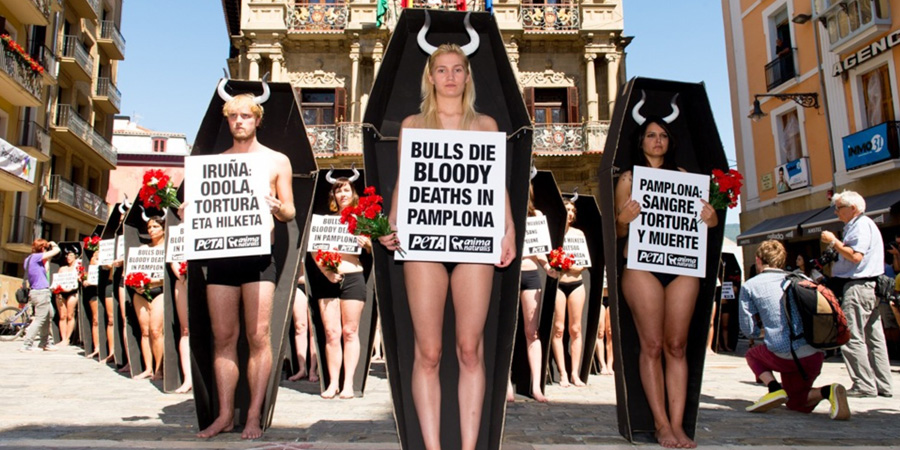
Fiesta de San Fermin: Run vs. FightFiesta de San Fermin, also known as the Running of the Bulls, is nine days of Spanish rituals, some that merit continuing and one that does not. The main event, running with the bulls in the ‘encierro’, is confusing due to the Spanish word ‘run’ which is ‘correr’ vs. ‘corrida’ that refers to a bullfight (an unspeakably cruel ritual that must stop). Unlike a bullfight, raging bulls running through the streets at 8am, though rife with testosterone and inciting macho bravura by those who run with the bulls, doesn’t harm the animals (if the rite ended there) and offers an adrenaline-charged backdrop for music, dancing, drinking kalimotxo, feasting on pintxos & sipping Absinthe at El Rincón de Hemingway in the quaint old town of Pamplona Spain. |
||
The Festival of San Fermin is the nine-day world famous adrenaline-packed Pamplona bull run. But let’s be clear about the difference between running with the bulls at the encierro and the ‘corrida’ (Spanish bullfighting) which isn’t essential to the San Fermin bull run or to the wild days and nights of partying, parades, fireworks, eating, drinking, dancing and participating in street debauchery amidst Spanish fiesta mayhem.
Running with the bulls, although an extreme sport where participants must be fit, sober and over 18, does not harm the animals. It takes place in a controlled area called the ‘encierro’, which means ‘enclosure’, since the streets where the bulls run are fenced off, starting at the corral, leading through town, and ending at the bull ring. The few minute running of the bulls, although dramatic due to the presence of human runners, is actually a way of getting bulls from one place to another, and despite a bullfight being the traditional eventuality of the poor bulls, it needn’t be so. It’s easy to get confused by the Spanish word for ‘run’ which is ‘correr’ versus the word for ‘bullfight’ which is ‘corrida’. To ‘correr’ with bulls is crazy, but not torturous to the animals, while ‘corridas’ are heinous events that should be abolished. There’s no need to attend a bullfight to enjoy the culturally unique events in honour of Pamplona’s patron saint San Fermín.
Fiesta de San Fermin is adrenaline-packed partying with bulls in Pamplona Spain!
The main feature is the bull run, but that comes with music, dancing, traditions, rituals, mayhem and debauchery that begins on the first day, at the wild….
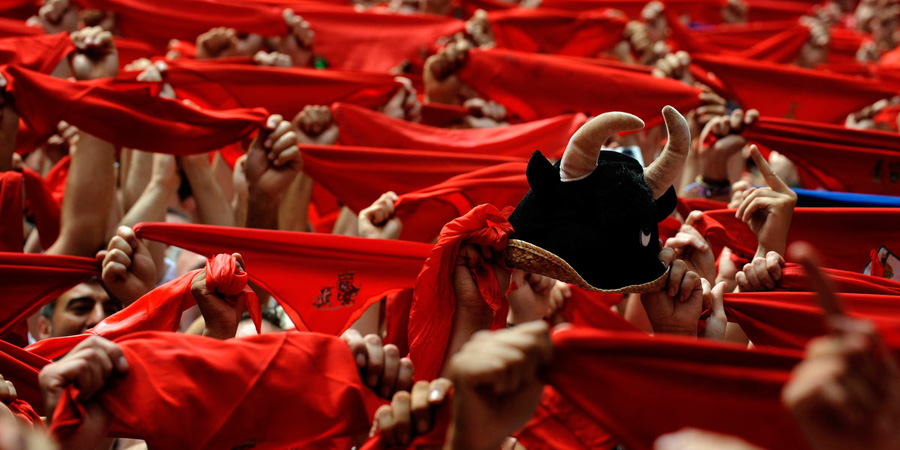
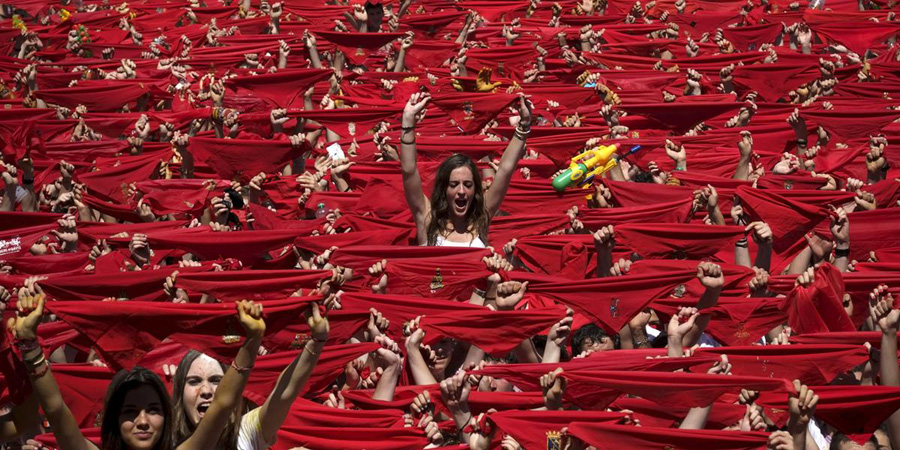
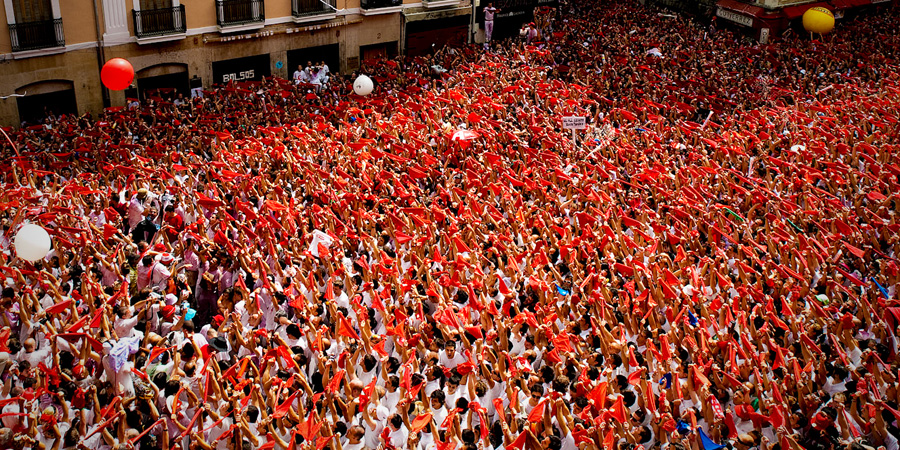
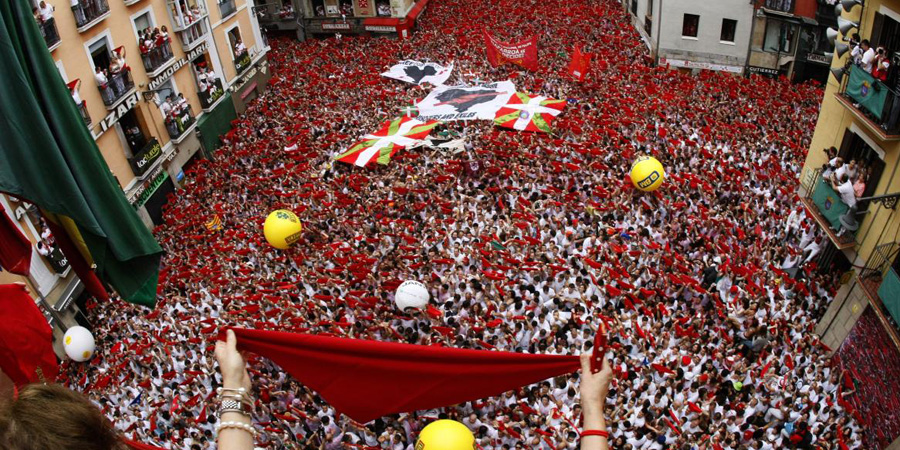
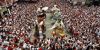
It begins the morning of the first day in front of city hall where throngs of revellers amass into a human swarm so packed they’re almost unable to breath.
Waiting. Waiting. Waiting.
The mayor delivers a few words from a balcony...
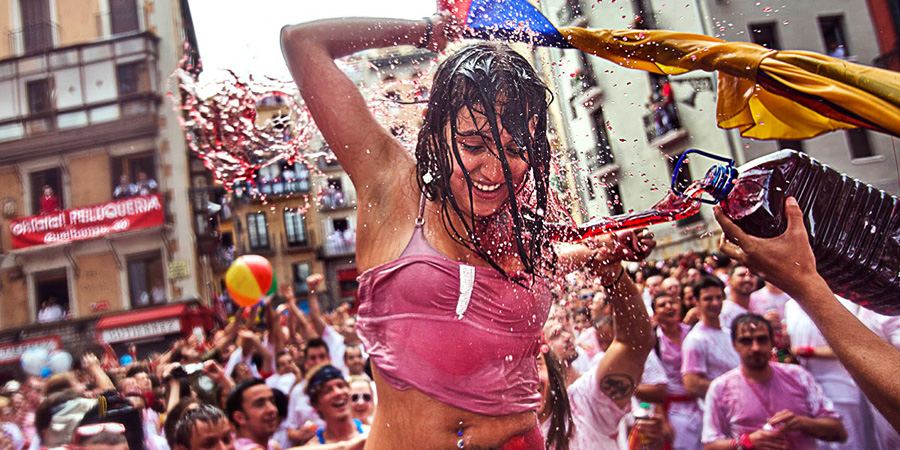
...then a shot is fired into the air... and a shout of a myriad voices crying “Viva San Fermín!” is raised while hundreds of bottles of champagne are uncorked.
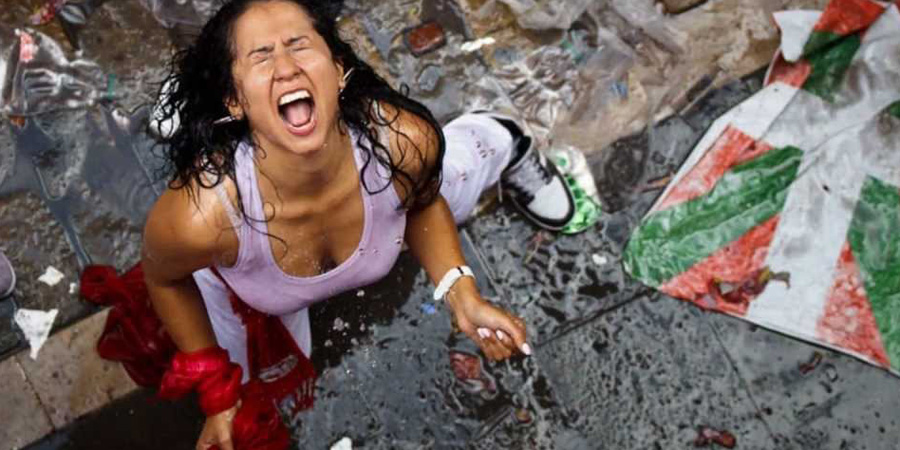
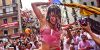
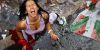
The mayhem and debauchery commences with red wine and champagne gulped and sprayed into the air; white costumes soaked with perspiration and wine; masses of partiers stirred into a frenzy, boiling in the heat, drinking, shouting, singing, whistling, pressed against one another…and then….some of the crowd gets naked.
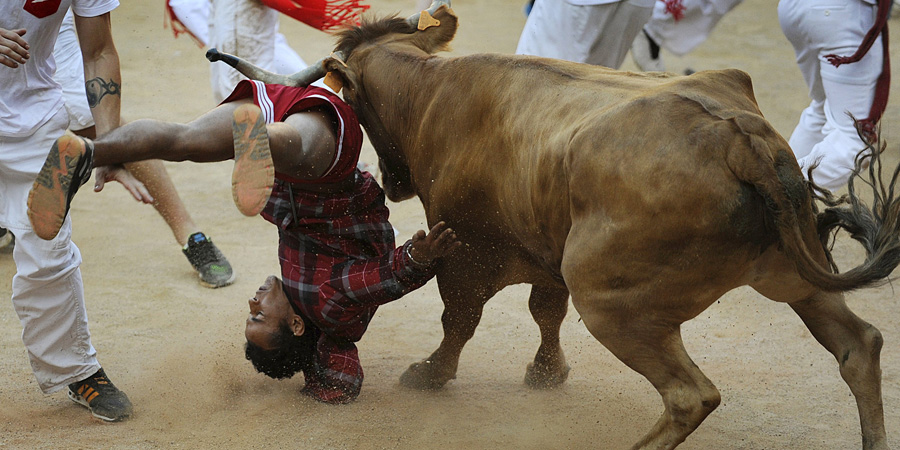
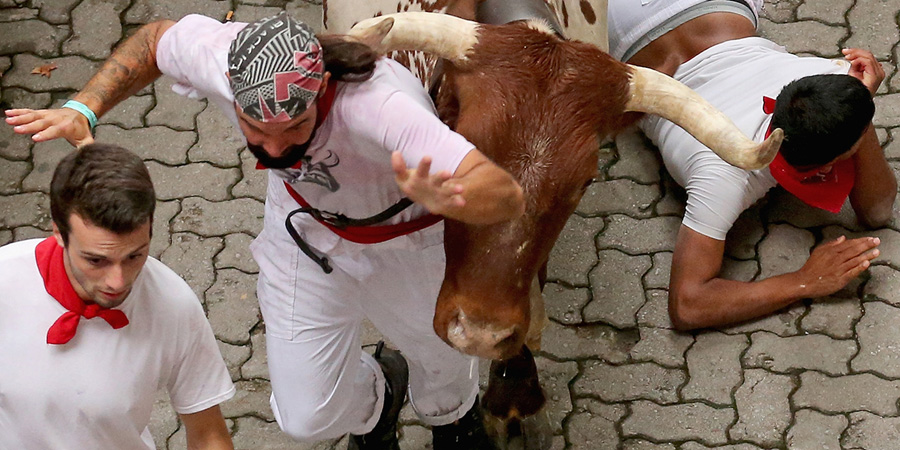
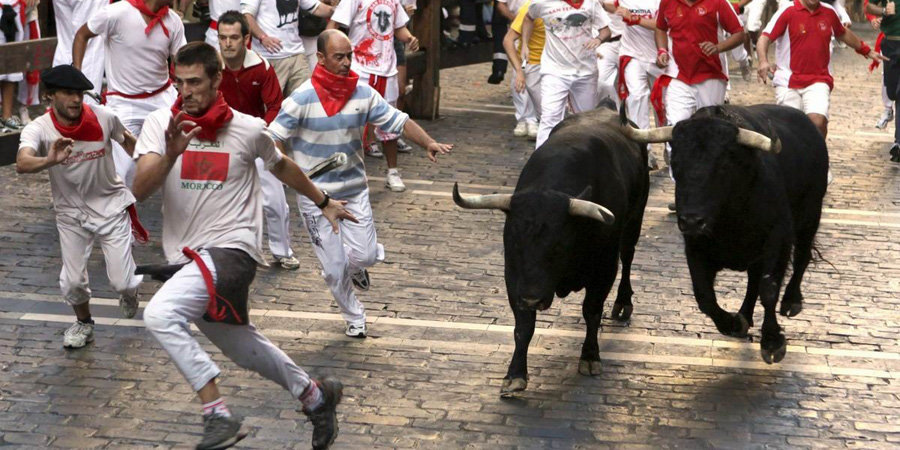
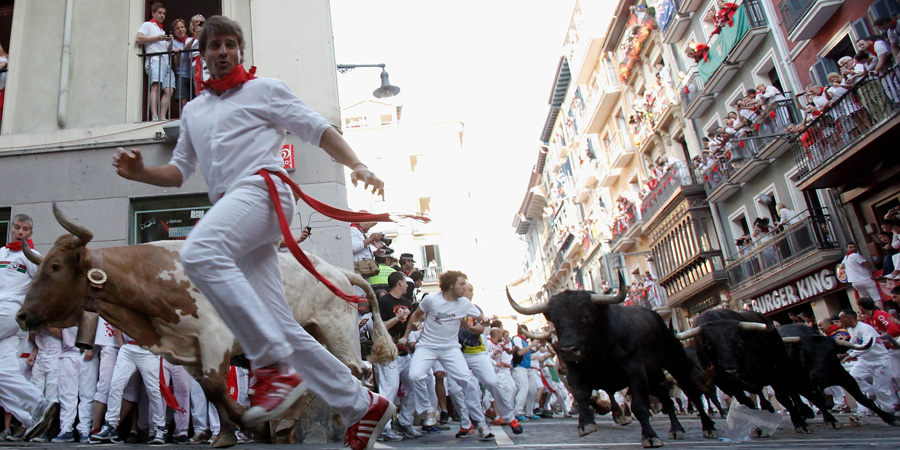
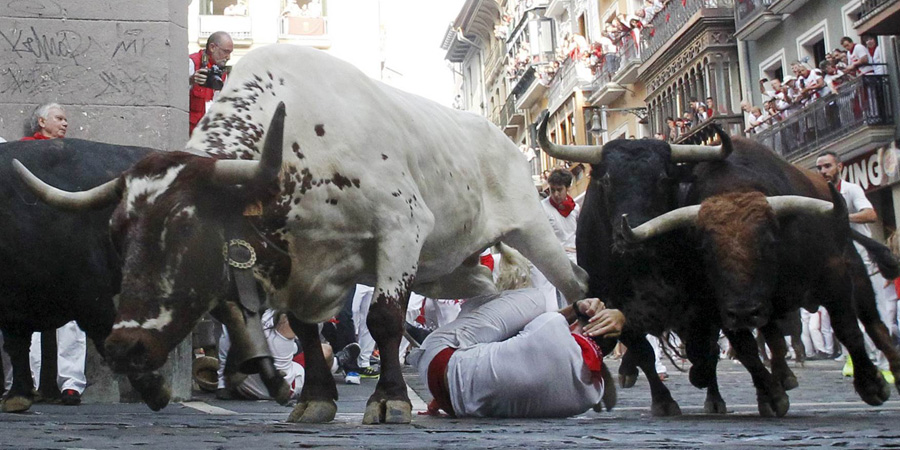
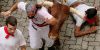
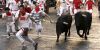
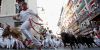
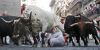
The encierro (meaning ‘enclosure’) is the actual running of the bulls, and begins on the second day at 8am, then continues each morning until the end of the festival. It’s what the Sanfermines are best known for. Although media images may give the impression that the running of the bulls is a free-for-all where raging bulls charge aimlessly through random city streets, it’s actually highly controlled space. After ritual chants and two rocket blasts, the bulls are loosed on an 825 meter run that starts at the bull corral, traverses parts of the old town that have been fenced off with wooden planks to create the ‘enclosure’, and leads directly to the bullring. It’s a quick adrenaline blast for bulls, amateur human runners, bull ‘shepherds’ and professional ‘dobladores’, and lasts only a few minutes – from 4-7 minutes with some of the longest runs lasting ten minutes tops. It ends with a final rocket blast is shot off to signal that all bulls are in the ring. In order to join the thousands who participate in running with the bulls, a person must be at the Cuesta of Santo Domingo before 7:30am, be sober, agile, 18+, free of all personal items, and be willing to promise to abide by the rules which include staying within the designated route and not touch or antagonize the bulls.
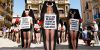
Note: Festinga does not provide information on the heinous Spanish bullfighting events that take place in Pamplona during the festival of San Fermin. While bullfighting may be the traditional reason behind the bull running, today, it’s not essential to end the day by torturing and killing the animals once they arrive at the bullring. It’s possible to enjoy the adrenaline-charged aspects of San Fermin without partaking of, or encouraging, bullfighting in Spain.
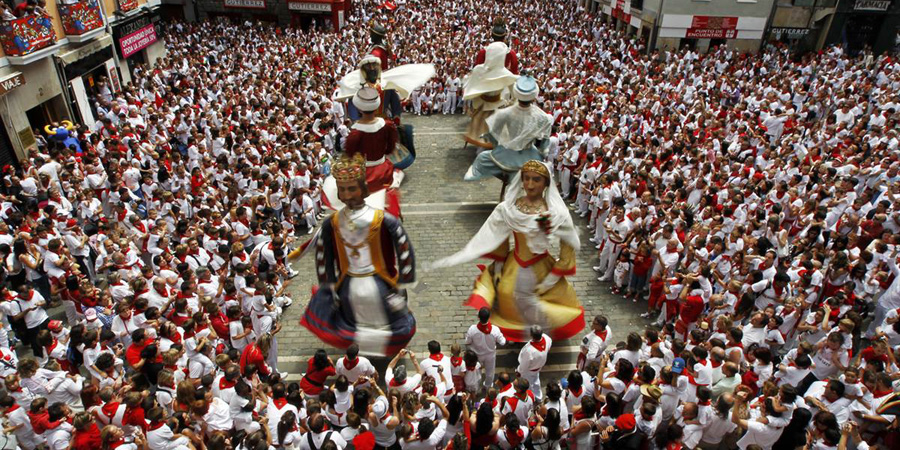
The Fiesta de San Fermín parade, or procession, is dedicated to the patron saint San Fermin (whose remains rest in the church of San Lorenzo) and his effigy gets carried through town followed by throngs of people including the who’s who of local church and government officials in all their finery, and the Pamplona brass band known as the Pamplonesa. But what separates this 2-hour parade from the average Spanish saint-carrying precession is the inclusion of the Gigantes y Cabezudos (giant big-headed marionette-like figures) with four enormous pairs of gigantic kings and queens that stand 4 meters tall and represent the four areas of the world: Europe, Africa, Asia, and the Americas. The royal entourage (actually called a ‘comparsa’) consists of a series of ginormous caricature-like figures, each with oversized heads and giant papier-mâché faces to represent everything from town leaders to Japanese figures and half-men-half-horse, wreak havoc while dancing waltzes, polkas and jotas to traditional music as they make their way through the narrow streets and squares of Pamplona.
If it weren’t for the fact that Fiesta de San Fermin (known locally as los Sanfermines) is so renowned for the running of the bulls, it would be a music festival. It’s nine days of virtually non-stop concerts, folkloric shows, live rock and world music performances, DJ sets and open-air dances with everything from traditional ‘txalaparta’ (a Basque musical instrument that makes a sound resembling the trotting of a horse) to African beats, Andean rhythms, retro rock’n’roll, latino pop, Spanish rock and electronic dance music.
If you manage to survive the Pamplona running of the bulls unscathed (maybe from a balcony) and are still in town on the final day, drag your danced-out, hung-over party-bones to the main town square one last time to cry the blues and sing ‘poor me’, joining villagers and international revellers as they wind down the debauchery with a candlelight closing ceremony of music and song.
What do you think?Thank you! |
|
AccommodationPamplona Accommodation
Pamplona Camping
Pamplona HotelsStay at the Heart of the bull running action in Pamplona. It’ll be noisy, and you might not sleep much, but you’ll never forget the experience.
Sleeping in the ParkSan Fermin’s unofficial motto is: “As long as it’s fun, practically anything goes.” And that includes sleeping in the park or wherever you find a place to rest your head. |
AmenitiesEats & Drinks:
Bars, Restaurants, Food Stalls, Water
Fresh & Clean:
Toilets
Cash & Shops:
Cash, Shops
Zone In & Out:
VIP Zone
Accessibility:
no
Amenities During San Fermin
Food & Drink
Wine & Champagne in Boxes or PlasticGlass is one of the few prohibited items during the Sanfermines, which is why wine and even champagne can be obtained everywhere (even in local shops) in cardboard boxes and plastic containers. Toilets
Street-party Areas
Estafeta, San Nicolás and Joaquín Jarauta are peppered with pinchos bars and pub-style ‘bares de copas’ with live bands, local drinks such as kalimotxo (a blend of red wine and soda), zillions of food stalls & street-side café-restaurants serving pintxos (pinchos) and myriads of elaborate Navarra-style tapas (with scrumptious ingredients piled high and held in place with a toothpick) and barrels of good-hearted local mayhem. Pamplona Bars
Mind Your Manners
Clothing
|
Datesstart Wed, 06 July 2016end Thu, 14 July 2016 Running of the Bulls Dates
|
Season & WeatherSeason: Summer
Temperature: 14 to 28 °C
Pamplona weather is hot and sunny during the day, but pleasantly cool at night. It’s in northern Spain, in a valley surrounded by mountains, which means slightly cooler temperatures. |
Ayuntamiento de Pamplona: Plaza Consistorial, Pamplona, Navarra, Spain.

Facebook
YouTube
Twitter
Other sites